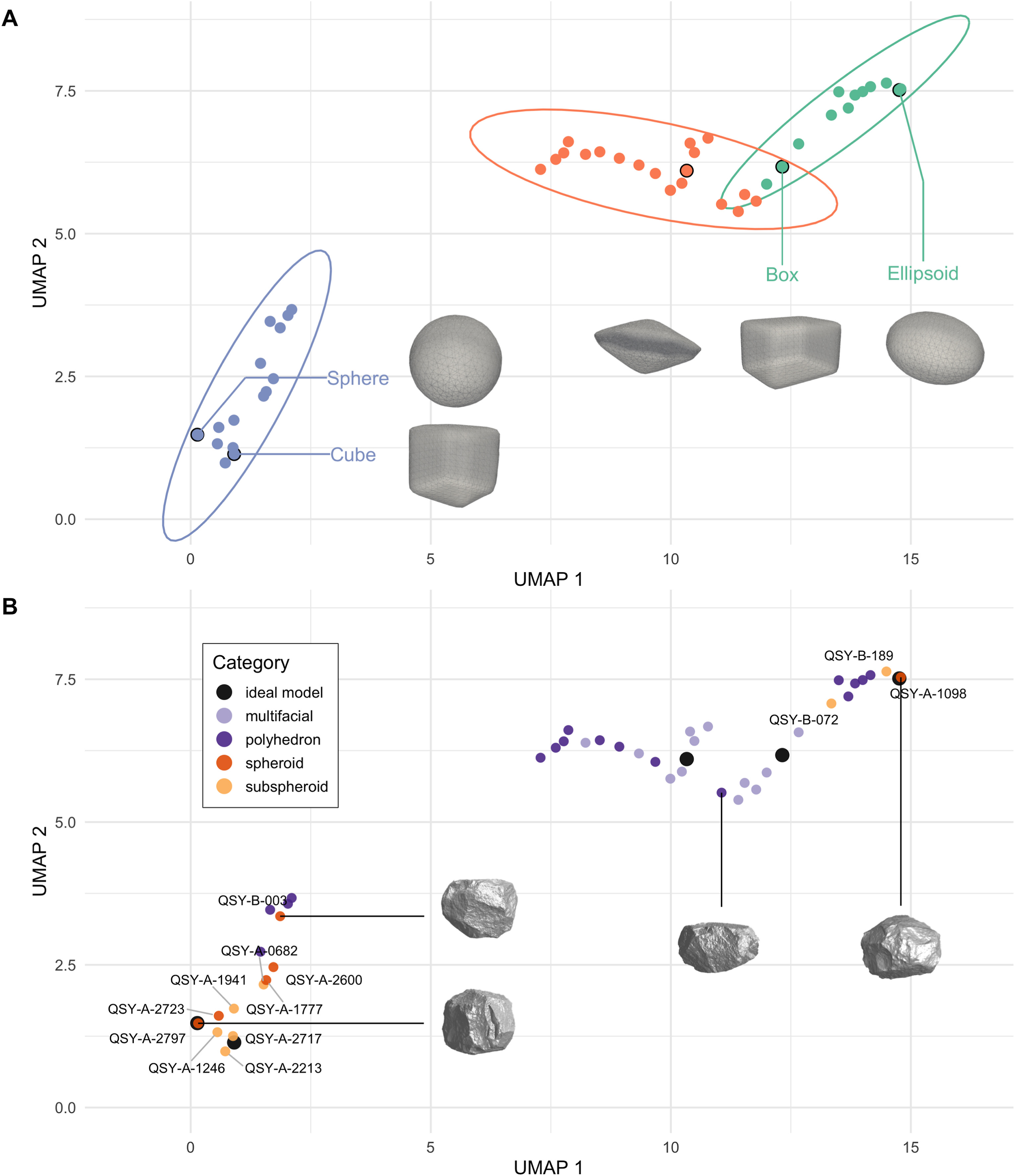
Spheroids are widely distributed lithic artifacts, yet their production strategies and functions remain debated. Traditional morphology-based typologies obscure their technological features and variability. Here we introduce a novel, open-source and reproducible framework that uses spherical harmonics as a method of quantitative morphological analysis, integrated with technological measures, to assess production strategies. Applied to Middle Pleistocene faceted spheroids from Qianshangying (∼429 ka, northern China), the approach demonstrates that spheroid production followed a conceptual template, involving a patterned reduction process aimed at achieving standardized spherical forms, and represents a deliberate shaping strategy. Our results further demonstrate that spheroids can be clearly distinguished from polyhedrons and multifacial cores exhausted through reduction. Our methods for investigating spheroid production strategies reveal a higher level of technological complexity than previously assumed for early lithic industries in northern China. Our study also provides a transparent and replicable framework with broad potential for advancing cross-regional and comparative studies of spheroid production but also more broadly for lithic technological research for any period and region.
Spherical harmonic analysis of faceted spheroids identifies shaping strategies and standardisation at Qianshangying (North China)
Ye, Zhi, Shuwen Pei, Dongdong Ma, Hao Li, Ben Marwick (2026). Spherical harmonic analysis of faceted spheroids identifies shaping strategies and standardisation at Qianshangying (North China). Journal of Archaeological Science 190 106551.
View PDF
(3 MB)