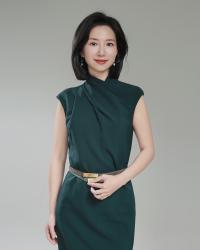
Biography
I am a cognitive & socio-cultural anthropologist with broad, interdisciplinary interests. To understand what it means to be human, my work examines this central question, moral development in humans––and at the era of AI, in machines. Interested in culture-mind interaction, I put anthropological and psychological theories in conversation, combine ethnography, experiment, and computational methods, and draw from Chinese thought. I have published extensively on on morality, child development, family, and education in Chinese societies and cross-cultural comparison. Lately my inquiry has expanded into AI, specifically, how AI ethics intersect with human development and value transformations in contexts of social change and global crises. I am Co-Director of the UW Center for Globally Beneficial AI.
My first monograph, The Good Child: Moral Development in a Chinese Preschool (Stanford University Press, 2017), based on fieldwork in Shanghai, it integrates ethnography and experiments to examine preschool children’s moral development under China’s one-child policy and a widely perceived societal “moral crisis.” It was translated into Chinese as part of a popular ethnography series "Mint Experiment" (East China Normal University Press, 2021).
My second monograph, "Unruly" Children (Cambridge University Press, 2024), traces how rural Han children learn morality at the height of Taiwan's Martial-Law era. It is an unconventional ethnography, a re-analysis of a unique set of historical fieldnotes collected by renowned anthropologists Arthur & Margery Wolf. Combining ethnographic and computational approaches such as NLP and social network analysis, I highlight children's active learning, including learning from and with peers, rather than parenting. Writing through and about fieldnotes, I connect the two themes of this book, learning morality and making ethnography, in light of human social cognition, and invite all of us to take children seriously.
I am a co-investigator of two new, interdisciplinary projects on learning and cultural transmission. One project, funded by Templeton World Charity Foundation, examines children's and youth's truth-seeking and truth-communication behavior in a polarized world, i.e., Northern Ireland. Another project, funded by Economic and Social Research Council (UK), examines imitation and knowledge transmission from early childhood to adolescence in America (Chinese American children in Seattle), Congo and Scotland.
My work strives to make anthropology more relevant, not only to other disciplines but also to the people we study. I do so through experimental writing on ethnography, organizing discussions on China anthropology, engaging the public, and collaborating with evolutionary anthropologists, psychologists, computer scientists, historians, mathematicians, etc. Currently I serve as an Associate Editor of American Anthropologist and editorial board member of Ethos.
Research
Selected Research
- Wood, L. A., C. Sutherland, J. Xu, et al. 2026. “Naturalistic Observations of Children and Adolescents in Diverse Contexts: Methods, Challenges and Recommendations.” Infant and Child Development 35, no. 3: e70114. https://doi.org/10.1002/icd.70114.
- Xu, Jing, Wood L, Sutherland C, Pope-Caldwell S, Mboumba O, Ondaye AE, Ngoma GR, Ndenguele R, Kiabiya Ntamboudila F and Lew-Levy S. 2026. Parental perspectives on children’s social learning in four cultures. Frontiers in Psychology. 17:1845262. doi: 10.3389/fpsyg.2026.1845262
- Xu, Jing. 2026. Irritation in Child-Rearing. Current Anthropology. https://doi.org/10.1086/741744
- Xu, Jing* & Jose Hernandez. 2025. Reading Children’s Moral Dramas in Anthropological Fieldnotes: A Human-AI Hybrid Approach. For the Inaugural Issue “Cultures of AI Interdisciplinarity,” Cambridge Forum on AI: Culture and Society. 1, e6. doi:10.1017/cfc.2025.10008.
- Cho, Mun Young, Yang Zhan*, and Jing Xu. 2025. “ “We Are All Implicated”: An Interview With Korean Anthropologist Mun Young Cho.” American Anthropologist 1–11. https://doi.org/10.1111/aman.70023
- Kornbluh, M., Amador, R., Bell, S., Neal, J. W., Simpson, S. B., Corbett, B., Corriveau, K., Flynn, E., McShane, C., Scholz, C., Wood, L., Xu, J., & Dautel, J. 2025. Exploring Facilitators and Disruptors of Polarization During Adolescence Within Contested Settings: A Case Study of Catholic and Protestant Youth in Northern Ireland. Journal of Adolescent Research, 0(0). https://doi.org/10.1177/07435584251344215
- Wen, N., D, Amir, J. Clegg, H. Davis, N. Dutra, M. Kline, S. Lew-Levy, T. MacGillivray, P. Gairan, Y. Wang, J. Xu, & B. Rawlings. 2025. Construct Validity in Cross-Cultural, Developmental Research: Challenges and Strategies for Improvement. Evolutionary Human Sciences. https://doi.org/10.1017/ehs.2025.3
- Woldekiros, Helina, Jing Xu & Yang Zhan. 2025. Bridging worlds: An interview with Ethiopian American archaeologist Helina Woldekiros. American Anthropologist. https://doi.org/10.1111/aman.28039
- Hewlett, Barry, Bonnie Hewlett & Jing Xu. 2024. Interview with Bonnie and Barry Hewlett: Encountering children in the field. Hunter Gatherer Research, 8 (1-2). https://doi.org/10.3828/hgr.2024.20
- Xu, Jing. 2024. "Commentary: East Asian Educational Migration as Narrative Quests." Global Networks. https://doi.org/10.1111/glob.12512. Download PDF
- An, Mengzhu, Jing Wang, Jing Xu and Wei Ye (equal authorship). 2024. Finding Wang Tonghui: The Life & After-life of a Pioneer Female Chinese Anthropologist. Feminist Anthropology. https://anthrosource.onlinelibrary.wiley.com/doi/10.1002/fea2.12139
- Sui, Z., Wang, Q. & Xu, J. 2024. Modeling children’s moral development in postwar Taiwan through naturalistic observations preserved in historical texts. Scientific Reports 14, 9140. https://doi.org/10.1038/s41598-024-59985-6
- Xu, Jing & Yang Zhan. 2024. "Can Anthropologists Get Humor? A Collaborative Experiment on Empathetic Knowing at a Time of Predicaments." American Anthropologist. https://doi.org/10.1111/aman.13980.
- Xu, Jing. 2024. "Unruly" Children: Historical Fieldnotes and Learning Morality in a Taiwan Village. Cambridge University Press.
- Xu, Jing. 2023. Re-discovering "the Child": A Re-interpretation of Arthur & Margery Wolf's Classic Fieldnotes. Sociological Review of China, no.9: 65-88. In Chinese.
- Xu, Jing. 2022. "The Moral Child": Anthropological Perspectives on Moral Development in China, in Ryan Nichols ed., The Routledge International Handbook of Morality, Cognition, Emotion, and Behavior in China. Routledge, pp.193-214.
- Xu, Jing. 2022. "Middle-aged Old Mothers" in China: Childrearing Anxiety, Humor and the Narrative Self. Ethos. DOI: 10.1111/etho.12327
- Xu, Jing. 2022. Learning Morality with Siblings: The Untold Tale of a Mid-Twentieth Century Taiwanese Family. Journal of Chinese History. doi:10.1017/jch.2021.31
- Xu, Jing. 2020. The Mischievous, the Naughty and the Violent in a Taiwanese Village: Peer Aggression Narratives in Arthur P. Wolf's "Child Interview" (1959). Cross-Currents: East Asia Culture and History Review (33). https://cross-currents.berkeley.edu/e-journal/issue-33/xu
- Xu, Jing. 2020. Tattling (Gaozhuang) with Chinese Characteristics: Norm Sensitivity, Moral Anxiety, and the “Genuine Child”. Ethos 48(1): 29-49. http://dx.doi.org/10.1111/etho.12262
- Xu, Jing. 2019. Learning "Merit" in a Chinese Preschool: Bringing the Anthropological Perspective to Understanding Moral Development. American Anthropologist. doi: 10.1111/aman.13269
- Xu, Jing. 2018.Review on Educating the Chinese Individual: Life in a Rural Boarding School by Mette Halskov Hansen. University of Washington Press. Journal of the Royal Anthropological Institute. 24: 646-647.
- Xu, Jing. 2018.The Good Child: How do Culture and Mind Intersect in Moral Development in China? Anthropology News. http://www.anthropology-news.org/index.php/2018/06/27/culture-and-mind-in-moral-development-in-china/
- Xu, Jing. 2017. Review on The Strange Child: Education and the Psychology of Patriotism in Recessionary Japan by Andrea Gevurtz Arai. Stanford University Press. Journal of Anthropological Research 73(2): 351-352.
- Xu, Jing. 2017. The Good Child: Moral Development in a Chinese Preschool. Stanford, CA: Stanford University Press.
- Xu, Jing, Saether, L., & Sommerville, J. 2016. Experience Facilitates the Emergence of Sharing Behavior among 7.5 Month-Old Infants. Developmental Psychology 52(11): 1732-1743. Download PDF
- Xu, Jing. 2015. Review on Children, Rights and Modernity in China: Raising Self-Governing Citizens by Orna Naftali. Palgrave Macmillan. The China Journal (74): 219-221.
- Xu, Jing. 2014. Becoming a Moral Child amidst China’s Moral Crisis: Preschool Discourse and Practices of Sharing in Shanghai. Ethos (2): 222-242. (Winner of 2013 Condon Prize in Society for Psychological Anthropology) Download PDF
Courses Taught
Spring 2026
Winter 2025
Winter 2024
Spring 2019
2023 Winter Quarter Co-Instructor (with Ben Marwick), Special Topics in Social Science and Statistics: "Text as Data."