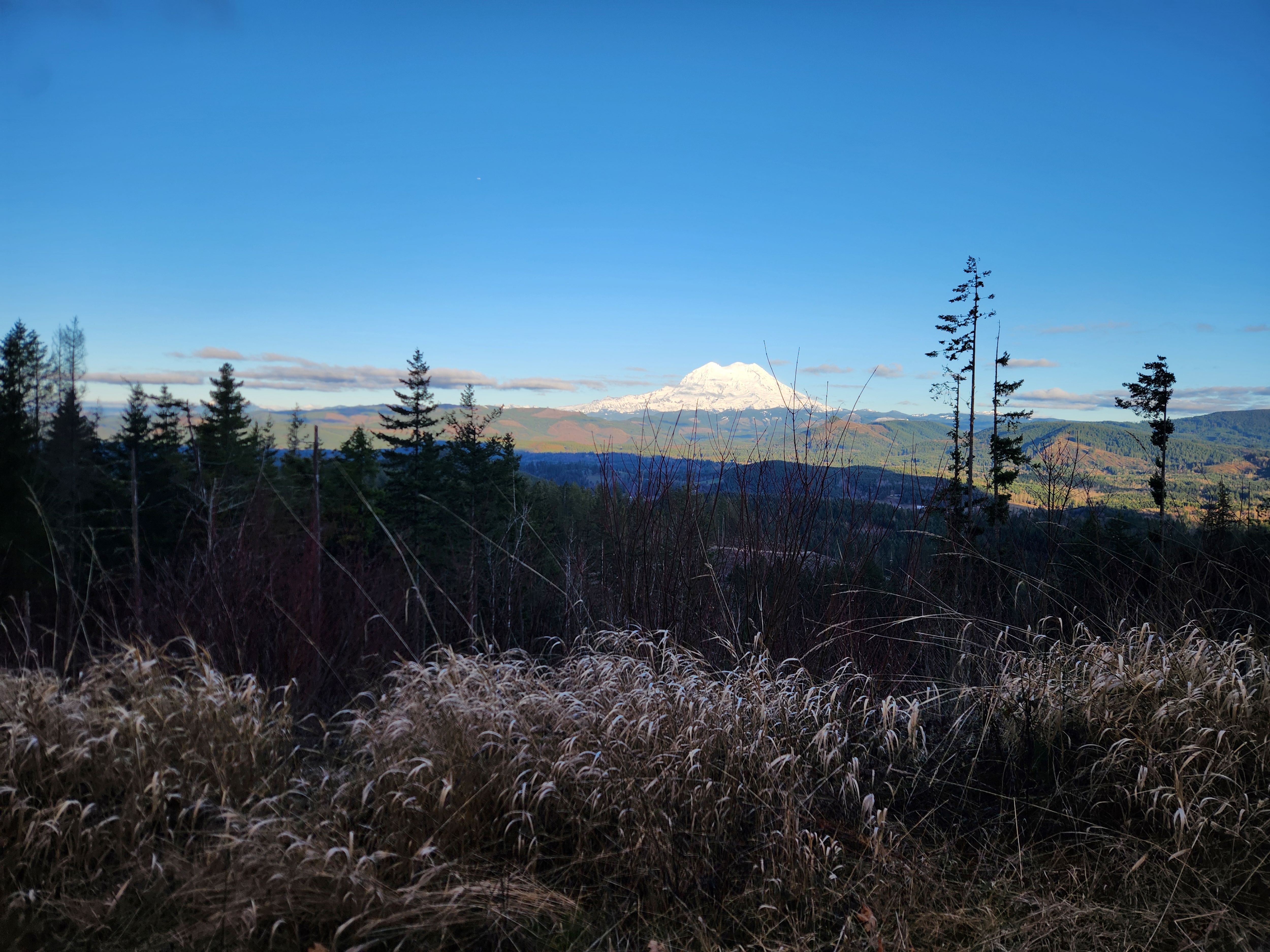
UW Anthropology hosted the 9th Northwest Evolution, Ecology, and Human Behavior (NWEEHB) Symposium, at the UW Pack Forest Conference Center Feb 27-Mar 1, 2026. NWEEHB is an intimate, interdisciplinary symposium held every other year, aimed at fostering connection and collaboration among regional anthropological and archaeological scholars. This year's gathering drew 45 attendees (including 26 grad and undergrad students) from seven universities — UW, Western Washington University, Washington State University, University of Oregon, University of Utah, University of Victoria, and Simon Fraser University. This was the first year that UW hosted the event, and it was a rounding success (helped by some surprisingly beautiful February weather).
The weekend included a Friday evening student poster session and social, Saturday research presentations and workshops on computational methods and pedagogy, and student research roundtables on Sunday. The symposium featured two plenary talks from outstanding PNW alumni. Brooke Scelza (UCLA, PhD UW Anthropology) drew on decades of cross-cultural fieldwork — including her long-term research with Himba pastoralists in Namibia — to explore how the social networks that support new mothers are just as critical to child-rearing as those that support children themselves. Adam Rorabaugh (Simon Fraser University, PhD WSU Anthropology) used mathematical modeling to explain how traditional Coast Salish practices of oral witnessing can transmit knowledge with exceptional accuracy, with relevance for how we navigate information and misinformation today.
Across eight podium presentations and seven posters, attendees engaged with a rich variety of research, including: dynamics of godparenthood in rural Mexico; how ancient stone tools reveal patterns of cultural transmission and adaptation; associations between ADHD-associated genotypes and nutritional status among contemporary pastoralists in Kenya; the role of adversity, collaborative foraging, and encephalization in shaping hominin evolution; sources of stigma affecting people with leprosy in Ethiopia; considerations for greater methodological rigor in meta-analyses; behavioral, socioeconomic, and hormonal impacts on postural stability and skeletal aging; how communities in Kenya, Mexico, Tonga, and Honduras navigate climate change and environmental risk; and what the skeletons of Ice Age teenagers can tell us about the evolution of adolescence.
Thank you to UW eScience, UW Center for Studies in Demography and Ecology, and Boise State University for funding and logistical support. All UW student costs of attendance were fully covered by UW Department of Anthropology donor funds.